
Finding out you are pregnant comes with a quick swirl of questions. When should the first prenatal visit happen, how many ultrasounds are typical, what will insurance cover, and what if you are paying cash. Clear answers help you plan with less stress and more confidence.
This guide outlines what usually happens in early prenatal care, how fetal ultrasound scheduling works, how long scans take, and what costs to expect in California whether you are insured or self-pay. You will also see where lower-cost options fit, and how our team coordinates referrals, imaging, and prenatal screening so your care feels organized from the start.
Renaissance Healthcare for Women provides holistic, genomics-informed obstetric care with in-person and telemedicine access. We coordinate imaging with local Maternal Fetal Medicine partners and align first-trimester screening, Noninvasive Prenatal Testing (NIPT), and second-trimester anatomy scans so you spend less time guessing and more time supported.
First prenatal visit timing and what to expect
For most pregnancies, scheduling the first prenatal visit between 7 and 9 weeks gestation works well. This timing allows us to confirm an intrauterine pregnancy, establish accurate dating, and review early symptoms, medications, and health history. If you have bleeding, significant pain, a history of ectopic pregnancy or miscarriage, or fertility treatment, contact us sooner for guidance and potential urgent assessment.
At the first visit, plan on a medical history review, vitals, an exam as indicated, baseline prenatal labs, vaccine review, and discussion of genetic screening options. Many patients choose NIPT around 10 weeks; carrier screening can be done preconception or early in pregnancy. Our team explains what each test looks for, typical insurance coverage, and out-of-pocket estimates before you decide.
Is 9 weeks too late for the first prenatal visit? No. Nine weeks is still appropriate for a thorough first appointment. If you are beyond 9 weeks, schedule as soon as you can so we can time screening windows accurately.
Ultrasound schedule and how long scans take
Typical low-risk pregnancy ultrasound timing includes:
- First-trimester dating ultrasound: around 7 to 10 weeks to confirm heartbeat and establish or verify due date.
- Detailed anatomy ultrasound: usually between 18 and 22 weeks to evaluate fetal anatomy, placenta location, and growth parameters.
- Additional scans: ordered as needed for symptoms, growth concerns, placenta follow-up, multiples, or maternal conditions.
How many ultrasounds should a pregnant person get? In an uncomplicated pregnancy, two is typical, though the exact number varies by medical need and clinician judgment. If issues arise, we add targeted growth or follow-up ultrasounds. For twins or higher-risk conditions, Maternal Fetal Medicine may see you more frequently.
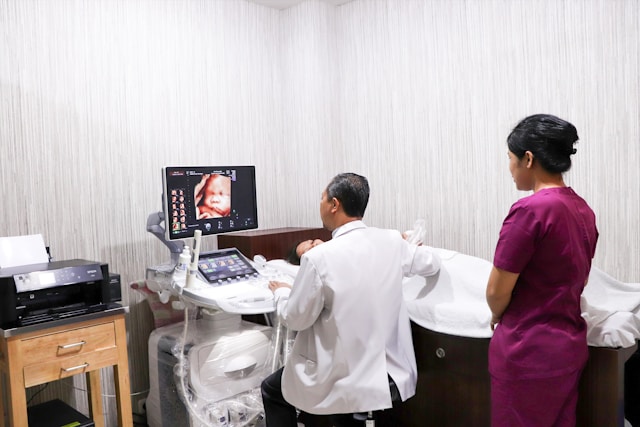
How long does a fetal scan take? A first-trimester dating scan often takes 15 to 30 minutes. A detailed anatomy scan usually takes 45 to 60 minutes, sometimes longer if baby’s position makes certain views hard to capture. Plan for check-in time and counseling afterward, especially during the anatomy appointment when we review findings and next steps.
Our clinic arranges ultrasound referrals and coordinates results so your prenatal schedule stays on track. If you need an urgent check for pain, bleeding, or decreased movement later in pregnancy, request obstetric triage immediately.
Insurance coverage in California
Are baby ultrasounds covered by insurance? Most employer-based and marketplace plans cover medically necessary prenatal ultrasounds when ordered by a clinician. Dating and anatomy scans usually meet that definition. Coverage details vary by plan, network status, and site of service. Deductibles and coinsurance may apply. When possible, we verify benefits and provide estimates before scheduling.
Genetic screening like NIPT is commonly covered for certain age groups or risk profiles, yet policies differ. Our team reviews options, indicates whether prior authorization is likely, and shares alternatives if coverage is limited.
Self-pay costs and lower-cost options
How much is a fetal ultrasound? In California, self-pay rates vary widely by facility. A first-trimester or anatomy ultrasound can range from a few hundred dollars to over one thousand, depending on whether the scan is done in a hospital department or an outpatient imaging center, and whether a radiology interpretation fee is billed separately. We avoid quotes that do not match your situation, so call us and we can provide ballpark ranges for local centers and help you compare pricing.
How much do OB appointments cost without insurance? Self-pay new obstetric visits can vary by practice and visit length. Many clinics have bundled prenatal packages and per-visit rates; exact pricing depends on what is included, the setting, and whether labs and imaging are billed separately. Because fee schedules change, our front desk provides current estimates, outlines payment timing, and reviews cost-saving pathways before you commit.
Where can I get an ultrasound without insurance? Community imaging centers and some Maternal Fetal Medicine practices offer transparent cash prices and payment plans. Our coordinators can direct you to reputable facilities nearby, including options that provide same-day or next-day scheduling when needed. If transportation or scheduling is a barrier, ask about telehealth counseling before and after the scan to limit in-person trips.
For patients prioritizing rapid access, our concierge membership can streamline same-day or next-business-day scheduling and extended counseling time. Learn more about access advantages through our concierge program by reviewing Palo Alto concierge medicine on our site.
Coordinated screening, referrals, and results
We combine evidence-based timelines with practical scheduling. Typical path:
- Early visit at 7 to 9 weeks with dating ultrasound order if needed, baseline labs, vaccine review.
- NIPT around 10 weeks with carrier testing as indicated.
- PreTRM risk screening available by blood draw at 19 to 20 weeks for qualifying patients, with transparent discussion about clinical value and cost.
- Anatomy ultrasound at 18 to 22 weeks with results discussion and any follow-up scheduling.
- Gestational diabetes screening around 24 to 28 weeks, plus targeted scans later if indicated.
We coordinate with Maternal Fetal Medicine for diagnostic testing, multiples, suspected anomalies, growth concerns, or complex maternal conditions. Results counseling can be done in person or via secure telemedicine.
If you need local prenatal coordination now, explore our Palo Alto prenatal visits overview to see how we combine in-clinic and telehealth support, including obstetric triage pathways for urgent concerns.
Practical tips to manage costs and timing
- Call early. As soon as you see a positive home test, contact the office so we can align your first visit with the best screening windows.
- Ask for estimates. Before labs, NIPT, or ultrasounds, request benefit verification and self-pay quotes. We can compare hospital-based and outpatient prices.
- Consider telehealth. Use virtual counseling for test decisions and results to reduce time away from work or family.
- Use community resources. If you are uninsured or underinsured, we will guide you to imaging centers with fair cash rates and assist with paperwork and referrals.
FAQ: quick answers
- Is 9 weeks too late for the first prenatal visit? No. Nine weeks is a common and appropriate time. If you are further along, book now so we can coordinate screening.
- How many ultrasounds should a pregnant person get? Typically two in a low-risk pregnancy, with more if medically indicated.
- How long does a fetal scan take? About 15 to 30 minutes for early dating, about 45 to 60 minutes for the anatomy scan.
- Are baby ultrasounds covered by insurance? Usually when medically necessary, though deductibles and coinsurance can apply; coverage varies by plan.
- How much is a fetal ultrasound? Self-pay pricing varies widely by facility. Expect a range from several hundred dollars upward; we provide local estimates on request.
- How much do OB appointments cost without insurance? Fees vary by practice and what is included. Our staff shares current estimates and payment options.
- Where can I get an ultrasound without insurance? Community imaging centers and Maternal Fetal Medicine clinics often offer cash prices. We can refer you to reputable, lower-cost options.
How we can help you get started
Renaissance Healthcare for Women coordinates prenatal labs, imaging, and genetic screening with a calm, practical approach. Whether you prefer traditional scheduling or concierge access, our team aligns visits with key milestones and communicates results clearly. To understand our geographic coverage and how we support patients across the Peninsula, see our summary of Palo Alto OB/GYN services or review details on fetal ultrasound in Palo Alto if you are comparing scan locations.
Summary: Book your first prenatal visit around 7 to 9 weeks, plan for a dating ultrasound early and an anatomy scan at 18 to 22 weeks, expect 15 to 60 minutes per scan depending on type, and verify insurance before each step. If you are self-pay, ask for local cash rates and we will point you to reputable centers. When you are ready to schedule or want personalized guidance, call our clinic at (650) 988-7830 and we will help you map out a plan that fits your timeline and budget.